I wasted my 8 months posting memes and the like on Instagram because I didn’t earn a penny. But the problem was not with the meme content. Do you know what it was on? I never learned on Instagram how we can earn money by selling digital products on Instagram. If I had to start again with no followers, no Content, no audience, and me on Instagram selling a digital product, it would be absolutely zero. Starting from. So what am I exactly? do? Today we will not do any nonsense. Today, we will share a step-by-step real blueprint.
Will follow what I wish I had gotten earlier. To be honest, you can post every da,y and you will probably go viral.
Why Instagram is the Ultimate Digital Product Marketplace
Instagram has evolved far beyond a photo-sharing app. With three billion monthly active users and an advertising revenue forecast of over $67 billion in 2025, it’s become a powerhouse for digital entrepreneurs. The platform offers something physical retailers can only dream of: direct access to billions of engaged consumers who are actively searching for products to buy. Best platforms to sell digital products as an independent creator?
Here’s what makes Instagram particularly compelling for digital product sellers. Research shows that 61% of users actively discover new products on the platform, while 29% of Instagram users make purchases directly through the app. More impressively, 70% of shoppers use Instagram specifically to research and buy products online. For Gen Z consumers, 36% start their entire product search journey on Instagram rather than traditional search engines.
The numbers speak for themselves. Instagram isn’t just a marketing channel anymore—it’s a complete sales ecosystem where digital creators are building million-dollar businesses from their smartphones. Whether you’re selling ebooks, online courses, design templates, or digital art, Instagram provides the tools, audience, and infrastructure to turn your expertise into revenue.
Understanding the Instagram Digital Product Landscape
The digital product market is experiencing explosive growth, with projections reaching $476.6 billion by 2025 and an annual growth rate approaching 10%. Instagram sits at the center of this revolution, offering unique advantages that traditional ecommerce platforms simply can’t match.
The Instagram Advantage for Digital Sellers
Instagram’s visual-first approach creates an ideal environment for showcasing digital products. Unlike text-heavy platforms, Instagram allows you to demonstrate value instantly through images, videos, and interactive content. The platform’s algorithm favors engaging content, meaning a well-crafted Reel about your digital product can reach millions of potential customers without spending a dollar on ads.
The demographics are equally compelling. Over 72% of teenagers and 76% of adults aged 18-29 use Instagram regularly, representing the exact audience most likely to purchase digital products. These users aren’t passive scrollers—they’re active participants who engage with business accounts, with 90% of Instagram users following at least one brand.
Why Digital Products Thrive on Instagram
Digital products align perfectly with Instagram’s mobile-first experience. Users can discover your product, learn about its benefits, make a purchase decision, and complete the transaction—all without leaving the app. This seamless experience, combined with Instagram’s visual storytelling capabilities, creates conversion rates that traditional websites struggle to match.
The social proof element amplifies your success. When customers share their experiences with your digital products through Stories, posts, or Reels, they’re essentially becoming your sales team. This organic word-of-mouth marketing is particularly powerful for digital products, where trust and perceived value drive purchasing decisions.
Best Digital Products to Sell on Instagram
Not all digital products perform equally well on Instagram. The platform’s visual nature and user behavior patterns favor specific types of products that deliver immediate, demonstrable value.
Educational Digital Products
Online courses and educational content dominate Instagram’s digital product landscape. The global e-learning market is projected to reach $457.8 billion by 2026, and Instagram provides the perfect funnel for capturing this demand. Micro-courses focusing on specific skills—from photography techniques to social media marketing—perform exceptionally well because they solve immediate problems.
Ebooks and guides translate beautifully to Instagram’s format. You can showcase chapters through carousel posts, share testimonials in Stories, and use Reels to demonstrate the transformation your book provides. Successful sellers often pair their ebooks with complementary content, building authority before asking for the sale.
Creative Assets and Templates
Digital templates represent one of Instagram’s highest-converting product categories. Social media templates, resume designs, Pinterest pins, and Canva templates sell particularly well because they save customers time and deliver instant results. The visual nature of these products makes them perfect for Instagram, where potential buyers can see exactly what they’re getting.
Digital planners and printables have created entire Instagram businesses. These products require minimal creation time using tools like Canva or Adobe Illustrator, yet command premium prices due to their immediate utility. Successful sellers create themed collections—wedding planners, fitness trackers, budget templates—that encourage repeat purchases.
Membership and Subscription Content
Exclusive content communities are transforming how creators monetize on Instagram. Rather than one-time product sales, savvy entrepreneurs build subscription-based models where customers pay monthly for ongoing access to premium content, resources, or coaching.
Software and Digital Tools
Lightroom presets, Photoshop actions, and photo filters remain consistently popular on Instagram. Photographers and content creators constantly seek tools to enhance their visual content, creating steady demand. The before-and-after format makes these products easy to market through Instagram’s visual platforms.
Setting Up Your Instagram Business Account for Success
Your Instagram business account serves as your digital storefront. Proper setup isn’t optional—it’s the foundation of your entire sales operation.
Converting to a Business Profile
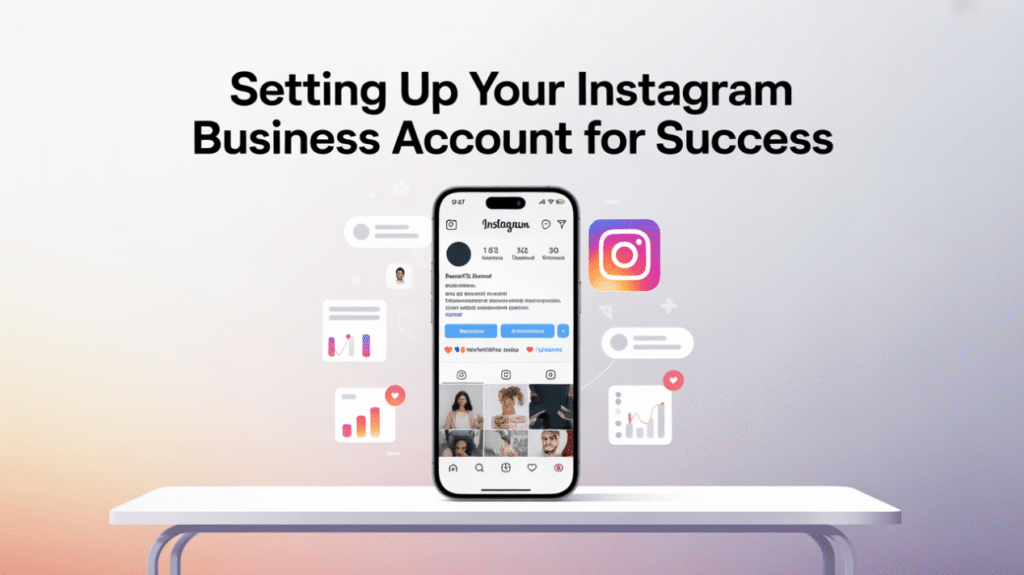
Converting your personal account to a business profile unlocks critical features that personal accounts lack. Navigate to Settings, select “Switch to Professional Account,” and choose “Business” as your account type. This simple switch grants access to Instagram Shopping, analytics tools, and contact options that transform how you interact with customers.
Select a business category that accurately represents your niche. Your category appears on your profile and helps Instagram connect you with relevant audiences. Be specific—”Digital Products Creator” or “Online Course Provider” works better than generic categories like “Entrepreneur.”
Optimizing Your Profile for Conversions
Your Instagram bio is prime real estate with only 150 characters to capture attention and drive action. Lead with a clear value proposition that explains exactly what you sell and who you help. Use line breaks to improve readability and include a compelling call-to-action that directs visitors to your link.
The profile link presents a strategic challenge since Instagram allows only one clickable link. This limitation has spawned an entire industry of “link in bio” tools. Services like Linktree, Beacons, or LinkShop create landing pages where you can showcase multiple products, though some sellers prefer directing traffic to their main sales platform.
Your profile picture should be immediately recognizable and consistent with your brand. For personal brands, use a high-quality headshot. Product-based businesses benefit from logo usage. Ensure the image remains clear even when displayed at thumbnail size.
Creating a Cohesive Visual Brand
Instagram rewards visual consistency. Develop a color palette, filter style, and post format that creates instant recognition when your content appears in someone’s feed. This doesn’t mean every post looks identical, but rather that your overall aesthetic remains cohesive and aligned with your brand values.
Your content grid serves as your portfolio. New visitors often scroll through your entire feed before deciding to follow or purchase. Plan your grid layout using tools like Later or Preview to ensure your profile presents a professional, intentional appearance.
Choosing the Right Platform to Host Your Digital Products
Instagram doesn’t directly host digital products—you need a third-party platform to handle file delivery, payment processing, and customer management. Your choice significantly impacts your success.
Shopify: The Professional’s Choice
Shopify dominates the Instagram digital product space for good reason. The platform integrates seamlessly with Instagram, allowing customers to complete purchases without leaving the app. While Facebook and Instagram don’t support direct digital product synchronization through Instagram Shopping, Shopify provides workarounds through apps like Fileflare or Digital Downloads.
Shopify’s $5 monthly starter plan suits beginning sellers, though it limits you to Buy Buttons rather than a full storefront. For most sellers, the $29 monthly plan provides better value with unlimited products, a complete website, and advanced analytics. The platform handles payment processing through Shopify Payments, with transaction fees ranging from 2.4% to 2.9% plus 30 cents per transaction.
The platform’s app ecosystem extends functionality infinitely. Need email marketing? Add Klaviyo. Want to create online courses? Integrate Teachable. Require abandoned cart recovery? Dozens of apps solve that problem. This flexibility makes Shopify scalable from side hustle to six-figure business.
Gumroad: Simplicity for Creators
Gumroad targets creators who prioritize simplicity over extensive features. The platform handles everything—payment processing, file delivery, customer emails—with minimal setup. You can have products listed and ready to sell within minutes of creating an account.
The free plan charges 9% per transaction, which decreases as your revenue grows. Once you pass certain thresholds, Gumroad’s fees become more competitive with traditional payment processors. The platform excels at membership products and subscription content, making it ideal for creators building recurring revenue streams.
Gumroad’s link structure makes Instagram integration straightforward. Rather than complex shop setups, you simply share your Gumroad product link in your bio, Stories, or direct messages. This simplicity comes with limitations—less customization, fewer marketing tools, and basic analytics—but for creators who value ease over control, Gumroad delivers.
Alternative Platforms Worth Considering
Etsy serves digital product sellers well, particularly for templates, printables, and creative assets. The platform brings built-in traffic from shoppers specifically seeking digital downloads. However, Etsy charges 6.5% per sale plus listing fees, and you compete with thousands of similar products.
Teachable and Thinkific specialize in online courses and educational content. These platforms provide course creation tools, student management systems, and marketing features specifically designed for digital education. If courses represent your primary product, these platforms offer better functionality than general ecommerce solutions.
SendOwl and Payhip provide middle-ground options between Shopify’s complexity and Gumroad’s simplicity. Both handle digital delivery effectively with reasonable fees and decent customization options. They work particularly well for sellers with smaller product catalogs who want professional features without monthly subscription costs.
Creating Your Instagram Shop
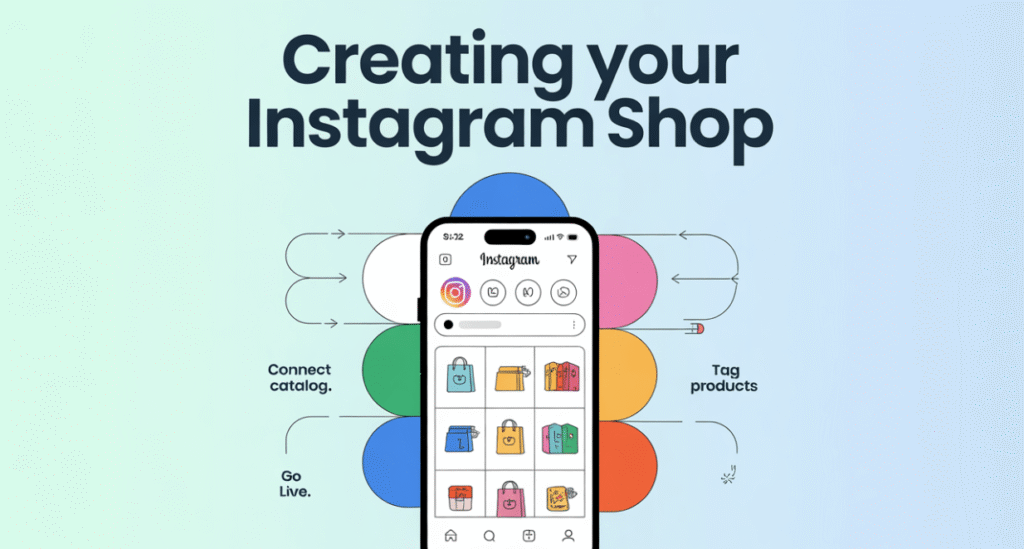
Instagram Shopping transforms your profile into a shoppable catalog, but the setup process requires patience and attention to detail.
Meeting Instagram Shopping Requirements
Before creating your shop, ensure you meet Instagram’s eligibility requirements. Your account must represent a business, sell physical goods, operate in a supported market, and comply with Instagram’s merchant agreement and commerce policies. Digital products face additional scrutiny since Instagram primarily designed Shopping features for physical goods.
Connect your Instagram account to a Facebook Page—Instagram Shopping requires this link. Navigate to Settings > Business > Shopping, then submit your account for review. Approval typically takes a few days, though some accounts face longer waits or rejections requiring appeals.
Setting Up Your Product Catalog
Product catalogs live in Facebook Commerce Manager, even though you’re selling on Instagram. Access Commerce Manager through your Facebook business account and create a new catalog, selecting “E-commerce” as your catalog type and “Online products” as your category.
You have several options for adding products: manual entry, bulk upload via spreadsheet, or automatic synchronization through platforms like Shopify. For small catalogs, manual entry works fine. Larger inventories benefit from spreadsheet uploads or platform integration.
Each product listing requires specific information: clear product name, detailed description, price, and high-quality images. Digital products benefit from images that visualize the product’s value rather than abstract concepts. Show course curriculum layouts, ebook page previews, or template examples.
Navigating Digital Product Restrictions
Instagram’s commerce policies favor physical products, creating challenges for digital sellers. The platform doesn’t officially support digital downloads through Instagram Shopping, requiring creative workarounds. Many sellers list their digital products as “services” or use external platforms for actual transactions while featuring products in their Instagram Shop.
This technical limitation hasn’t stopped thousands of creators from successfully selling digital products on Instagram. The key lies in using Instagram for discovery and marketing while processing transactions through approved platforms. Your Instagram Shop showcases what you offer, your bio link directs to purchase, and third-party platforms handle fulfillment.
Content Strategy: Turning Followers into Buyers
Creating content that converts requires understanding Instagram’s algorithm, user behavior, and psychological triggers that drive purchasing decisions.
Building Trust Through Value-First Content
The most successful Instagram digital product sellers follow the 80/20 rule: 80% valuable free content, 20% promotional posts. This balance builds trust, establishes authority, and creates genuine reciprocity. When you consistently deliver value, followers become primed to purchase when you do promote products.
Value-first content takes many forms. Educational posts teaching concepts related to your product demonstrate expertise. Behind-the-scenes content humanizes your brand and builds connection. User testimonials and success stories provide social proof while showing transformation.
Content Types That Drive Sales
Reels have become Instagram’s highest-performing content format, with reach rates averaging 37.87%—nearly double other content types. The platform prioritizes Reels in both follower feeds and Explore pages, making them essential for reaching new audiences. Successful product Reels balance entertainment with education, hooking viewers in the first second while delivering genuine value.
Carousel posts excel at in-depth education and product showcases. The swipe-through format encourages engagement while allowing you to build comprehensive arguments for your product’s value. Use carousels to break down complex topics, showcase product features, or present before-and-after transformations.
Stories create intimacy and urgency unavailable in feed posts. The 24-hour lifespan encourages immediate action, making Stories ideal for limited-time offers, product launches, or exclusive behind-the-scenes content. Poll stickers, question boxes, and countdown timers transform passive viewers into active participants.
Content Calendar Strategy
Consistency beats perfection in Instagram’s algorithm. Posting 2-3 times weekly drives an average 19% growth rate, while 10+ posts weekly can boost growth by 79%. However, quality matters—poorly conceived content posted frequently performs worse than strategic, valuable posts shared less often.
Plan content around product launch cycles. Build anticipation weeks before a launch with educational content addressing problems your product solves. Share development updates, preview features, and invite feedback. This pre-launch content primes your audience for purchase while building investment in your product’s success.
Balance content types to maintain audience interest while satisfying algorithm preferences. Alternate between Reels for reach, carousels for depth, and single-image posts for aesthetic cohesion. Stories maintain day-to-day connection while driving traffic to bio links.
Instagram Features That Drive Digital Product Sales
Instagram offers numerous features beyond the main feed, each serving specific roles in your sales funnel.
Instagram Stories for Direct Selling
Stories generate over 500 million daily active users, creating massive opportunity for product promotion. The link sticker (available to all accounts) allows direct linking to product pages, eliminating the “link in bio” friction that loses sales.
Use Stories for flash sales, limited-time discounts, or product drops. The ephemeral nature creates urgency while the swipe-up functionality (now replaced by link stickers) provides friction-free purchasing paths. Highlight important Stories to your profile for evergreen access to key content like product overviews or testimonials.
Story polls and questions transform passive viewers into active participants. Ask your audience about pain points, desired features, or pricing preferences. This engagement provides market research while building anticipation for products that solve expressed problems.
Reels for Viral Product Discovery
Instagram’s push toward short-form video makes Reels non-negotiable for digital product sellers. Reels between 60-90 seconds generate 24% more shares than shorter videos, though the platform technically allows up to 90-second content.
Successful product Reels hook viewers immediately with pattern interrupts, bold statements, or curiosity gaps. The first three seconds determine whether viewers keep watching, so make them count. Quick cuts, on-screen text, and trending audio increase retention while making content accessible without sound.
Tutorial Reels perform exceptionally well for digital product sellers. Show your product in action, demonstrate results, or teach a concept that positions your product as the logical next step. This approach provides value while naturally leading viewers toward purchase.
Instagram Live for Real-Time Connection
Live sessions build deeper connections than any other content format. The real-time interaction creates authenticity that recorded content can’t replicate. Host live Q&A sessions, product demonstrations, or behind-the-scenes looks at your business.
Product launches during Instagram Live create urgency and excitement. Announce exclusive discounts for live viewers, demonstrate product features in real-time, and answer purchase objections immediately. The ability to pin comments and share links makes Live sessions powerful sales tools.
Collaborate with other creators through Live rooms. These joint sessions expose you to partner audiences while providing social proof through association. Choose collaborators whose audiences overlap with your ideal customer without direct competition.
Direct Messages as Your Secret Weapon
Instagram DMs create direct communication channels with potential customers. While automation tools can handle initial outreach, personalized conversations convert at dramatically higher rates than automated sequences.
Use DMs to answer product questions, provide personalized recommendations, and overcome purchase objections. Many successful sellers close sales entirely through DMs, particularly for higher-priced products where buyers need additional assurance.
Create welcome sequences for new followers using automation tools like ManyChat. These sequences introduce your brand, segment your audience based on interests, and guide followers toward relevant products. Balance automation with genuine relationship building for best results.
Marketing Strategies That Convert
Converting Instagram followers into paying customers requires intentional marketing strategies that guide people through awareness, consideration, and purchase stages.
The Power of User-Generated Content
User-generated content (UGC) provides social proof while creating authentic marketing material. Encourage customers to share their experiences with your digital products by creating branded hashtags, running contests, or offering incentives for featured content.
Repost customer content to your feed and Stories, always crediting original creators. This recognition encourages more customers to share while showing potential buyers real people achieving real results. UGC converts better than branded content because it removes the natural skepticism toward advertising.
Create systems for collecting testimonials and success stories. Send follow-up emails asking satisfied customers to share their experiences. Provide simple templates or questions that make sharing easy. Video testimonials particularly impact purchasing decisions, as facial expressions and tone convey authenticity that text cannot.
Influencer Collaborations and Partnerships
Influencer marketing on Instagram generates strong ROI, with 79% of marketers considering it essential for campaigns. However, successful collaborations require strategic partner selection rather than simply choosing accounts with large followings.
Micro-influencers (10,000-100,000 followers) often deliver better results than mega-influencers for digital product sales. Their audiences trust their recommendations more, engagement rates run higher, and collaboration costs remain accessible for most budgets. Look for influencers whose values align with your brand and whose audience matches your ideal customer profile.
Structure partnerships for mutual benefit. Rather than one-off sponsored posts, create ongoing relationships where influencers genuinely believe in your products. Provide affiliate links, offer exclusive discounts for their audiences, or develop co-branded products that serve both communities.
Email Marketing Integration
Email marketing remains one of the highest-converting channels for digital product sales. Use Instagram to build your email list through lead magnets—free resources that provide immediate value in exchange for email addresses.
Create dedicated landing pages for Instagram traffic offering exclusive resources, discount codes, or mini-courses. Share these links through Stories, bio optimization, or automated DM sequences. Once subscribers join your list, nurture them with valuable content before promotional emails.
Segment your email list based on Instagram engagement and product interests. Followers who engage with specific content types demonstrate interest in related products. Targeted emails convert dramatically better than generic broadcasts because they address specific needs and desires.
Paid Advertising for Accelerated Growth
Instagram ads reached 1.74 billion users as of January 2025, providing massive scale for digital product promotion. While organic content builds sustainable growth, paid advertising accelerates results and reaches audiences beyond your current followers.
Feed ads generate the majority of Instagram’s ad revenue at 53.7%, though Reels advertising is growing rapidly. Start with feed ads for reliable results, then test Reels ads as you scale. Instagram’s targeting capabilities allow precise audience definition based on demographics, interests, behaviors, and even engagement with competitor accounts.
Average cost-per-click ranges from $0.40 to $0.70, though actual costs vary based on industry, targeting, and ad quality. Budget modestly initially while testing ad creative, audiences, and offers. Scale successful campaigns while continuously testing new variations.
The Product Launch Formula
Strategic product launches create revenue spikes while building excitement around your digital products. Rather than simply announcing products, successful launches follow a structured sequence that maximizes sales.
The pre-launch phase (2-4 weeks before launch) builds anticipation through content that addresses your audience’s pain points. Share your creation journey, preview features, and involve your audience in final decisions. This involvement creates investment in your product’s success.
The launch phase (3-7 days) concentrates all promotional efforts into a compressed timeframe. Announce the launch through every channel—feed posts, Stories, Reels, email, DMs. Create urgency through limited-time bonuses, early-bird pricing, or quantity restrictions.
Post-launch content showcases early customer results and maintains momentum. Share testimonials, address common questions, and remove purchase objections for followers still considering. Extended cart-open periods with clear end dates give hesitant buyers additional time while maintaining urgency.
Measuring Success: Analytics and Optimization
Data-driven decision making separates successful Instagram businesses from struggling accounts. Instagram provides robust analytics tools, but knowing which metrics matter determines whether you improve or simply collect numbers.
Key Metrics for Digital Product Sellers
Reach and impressions indicate content visibility, but don’t directly correlate with sales. Track these metrics to understand content performance and algorithm favor, but don’t mistake high reach for business success. Many accounts generate massive reach while earning minimal revenue.
Engagement rate measures how your audience interacts with content relative to follower count. Calculate it by dividing total engagements (likes, comments, shares, saves) by followers, then multiplying by 100. Rates above 3% indicate strong audience connection, while rates below 1% suggest content misalignment with follower interests.
Profile visits and website clicks directly indicate sales funnel effectiveness. These metrics show how well your content drives traffic to purchase opportunities. Track them weekly to identify which content types and topics generate the most interest in your products.
Conversion Tracking and Attribution
Instagram’s native analytics don’t track sales directly, requiring integration with your sales platform. Most digital product platforms (Shopify, Gumroad, etc.) provide analytics showing traffic sources and conversion rates.
Use UTM parameters on links shared through Instagram to track which content drives sales. Create unique UTM codes for different post types, campaigns, or products. This granular tracking reveals which marketing efforts actually generate revenue versus simply looking engaging.
Calculate customer acquisition cost (CAC) by dividing total marketing expenses by new customers acquired. For Instagram-specific CAC, include paid advertising costs, content creation expenses, and time invested. Compare CAC to customer lifetime value (CLV) to ensure sustainable unit economics.
A/B Testing for Continuous Improvement
Systematic testing improves results faster than intuition alone. Test one variable at a time—post timing, content format, hook styles, or call-to-action language. Run tests long enough to gather statistically significant data, typically 2-4 weeks for most Instagram accounts.
Test post captions, particularly your opening hook and call-to-action. The first sentence determines whether followers read further, while your CTA drives the desired action. Small caption tweaks can double engagement rates when properly optimized.
Experiment with content posting times using Instagram’s audience insights. The platform shows when your followers are most active, but optimal posting times vary by audience. Test different time slots and measure engagement rates to discover your specific sweet spot.
Common Mistakes to Avoid
Learning from others’ mistakes saves time, money, and frustration. These common pitfalls derail many Instagram digital product businesses.
Focusing on Follower Count Over Engagement
Vanity metrics like follower count feel good but don’t pay bills. Accounts with 50,000 disengaged followers earn less than accounts with 5,000 highly engaged followers. Focus on building an audience that cares about your content and trusts your recommendations.
Buying followers or using engagement pods destroys account health. Instagram’s algorithm detects artificial engagement, reducing your organic reach. Worse, fake followers never become customers, making your actual conversion rate appear terrible when you analyze it properly.
Selling Before Building Trust
Aggressive selling to new followers alienates potential customers. People follow you for value, not constant sales pitches. Build trust through consistent, helpful content before asking for purchases.
The know-like-trust progression determines when followers become buyers. They must know you exist, like your content and approach, and trust you’ll deliver on promises. This progression takes time, typically weeks or months of consistent content consumption before purchasing feels natural.
Neglecting Community Engagement
Instagram rewards two-way communication, not broadcasting. Respond to comments on your posts within the first hour to maximize engagement and algorithm favor. Reply to DMs personally, even as your account grows. This interaction builds relationships that convert to sales.
Engage with other accounts in your niche—not just competitors, but complementary businesses and potential customers. Thoughtful comments on others’ posts increase visibility while building industry relationships that can lead to collaborations.
Inconsistent Posting Patterns
Algorithm momentum favors consistency. Posting daily for a week, then disappearing for a month, kills your reach. Instagram interprets inconsistency as a lack of commitment, reducing how many followers see your content.
Choose a posting frequency you can maintain long-term. Better to commit to three high-quality posts weekly than attempt daily content that leads to burnout. Consistency compounds over time, with each post building on previous momentum.
Ignoring Instagram’s Algorithm Changes
Instagram continuously evolves its algorithm and features. Strategies that worked last year may be ineffective today. Stay informed about platform changes through official Instagram accounts, industry blogs, and creator communities.
Adapt quickly to new features like Reels, Guides, or Threads. Instagram typically pushes new features aggressively, giving early adopters massive reach advantages. Being among the first to leverage new formats can dramatically accelerate your growth.
More information
https://earnaidesk.com/best-ai-products-to-build-in-24-hours/
https://earnaidesk.com/create-digital-products-with-ai/
Frequently Asked Questions
Can you really sell digital products directly on Instagram?
Yes, but with limitations. Instagram Shopping primarily targets physical products, requiring workarounds for digital sellers. Most successful sellers use Instagram for marketing and discovery while processing transactions through platforms like Shopify, Gumroad, or Teachable. You can share product links through your bio, Stories, Reels, or direct messages.
How much does it cost to start selling digital products on Instagram?
Starting costs are minimal. Instagram accounts are free, and many digital product platforms offer free or low-cost plans. Shopify’s starter plan costs $5 monthly, while Gumroad charges no upfront fees (only transaction percentages). Your main investment is time, creating quality products and content. Budget $0-50 monthly for beginners, increasing as you scale.
What digital products sell best on Instagram?
Educational content (online courses, ebooks), creative templates (social media templates, Canva designs), digital planners and printables, photography presets, and digital artwork consistently perform well. Success depends more on solving specific problems for defined audiences than on product type. Niche down rather than trying to appeal to everyone.
Do I need a large following to make sales?
No. Micro-influencers with 10,000 followers often earn more than accounts with 100,000 disengaged followers. Focus on engagement quality over follower quantity. Many successful digital product sellers make consistent sales with 2,000-5,000 highly engaged followers who trust their recommendations.
How long does it take to make money selling digital products on Instagram?
Timeline varies based on starting point and effort. Complete beginners typically need 3-6 months of consistent content creation before generating significant sales. Accounts with existing audiences or in-demand products can see faster results. Focus on providing value first, then monetization follows naturally.
Is paid advertising necessary for success?
No, but it accelerates growth. Many sellers build profitable businesses entirely through organic content. Paid advertising helps you reach larger audiences faster and test products before investing time in organic growth. Start with organic content to validate demand, then consider ads for scaling.
How do I handle customer service for digital products on Instagram?
Create FAQ highlight reels on your profile, addressing common questions. Use automated DM responses for initial inquiries, then follow up personally. Most digital product platforms handle technical issues like download problems. For Instagram-specific questions, respond quickly and professionally. Good customer service generates repeat buyers and positive word-of-mouth.
Can I sell digital products on Instagram without a website?
Absolutely. Many successful sellers operate entirely through Instagram and third-party platforms like Gumroad or Stan Store. These platforms provide product pages, payment processing, and file delivery without requiring a full website. Your Instagram profile essentially becomes your website, with your link directing to a landing page showcasing products.
Take Action Today: Your Instagram Digital Product Journey Starts Now
You now have the complete blueprint for selling digital products on Instagram. The opportunity is massive—three billion monthly active users, 61% actively discovering products, and a marketplace hungry for expertise and solutions.
The difference between dreamers and earners isn’t information—it’s implementation. Start today by taking one concrete action:
This Week’s Action Steps:
- Convert to an Instagram business account if you haven’t already
- Choose one digital product idea that aligns with your expertise
- Select a sales platform (Shopify, Gumroad, or Teachable) and create an account
- Optimize your Instagram bio with a clear value proposition and call-to-action
- Create and post one piece of value-first content related to your future product
This Month’s Goals:
- Create your first digital product (start small—even a mini-guide or template)
- Post consistently 3-4 times per week with a mix of educational and behind-the-scenes content
- Engage with 10-15 accounts daily in your target niche
- Test your product with a soft launch to your most engaged followers
- Gather feedback and refine based on early customer experiences
Remember: Every successful Instagram digital product business started exactly where you are now. The accounts earning $10,000+ monthly from digital products weren’t born with massive followings or special advantages. They simply started, learned from results, and continuously improved.
Your expertise has value. Your knowledge can solve problems for thousands of people. Instagram provides the platform, the audience, and the tools. The only missing ingredient is your decision to begin.
Stop waiting for the perfect moment, the perfect product, or the perfect following. Start now with what you have, where you are. Your future customers are scrolling Instagram right now, searching for exactly what you can provide.
The question isn’t whether you can succeed in selling digital products on Instagram. The question is: Will you take action today?
Ready to turn your Instagram followers into customers? Start creating your first digital product today and share your journey using #DigitalProductCreator. Tag us—we love celebrating creator wins!